
How to Teach Your Kid to Make a Phone Call
A little practice turns “What do I say?” into “Can I call Grandma?” Start with a friendly voice and a very short script.
Updated
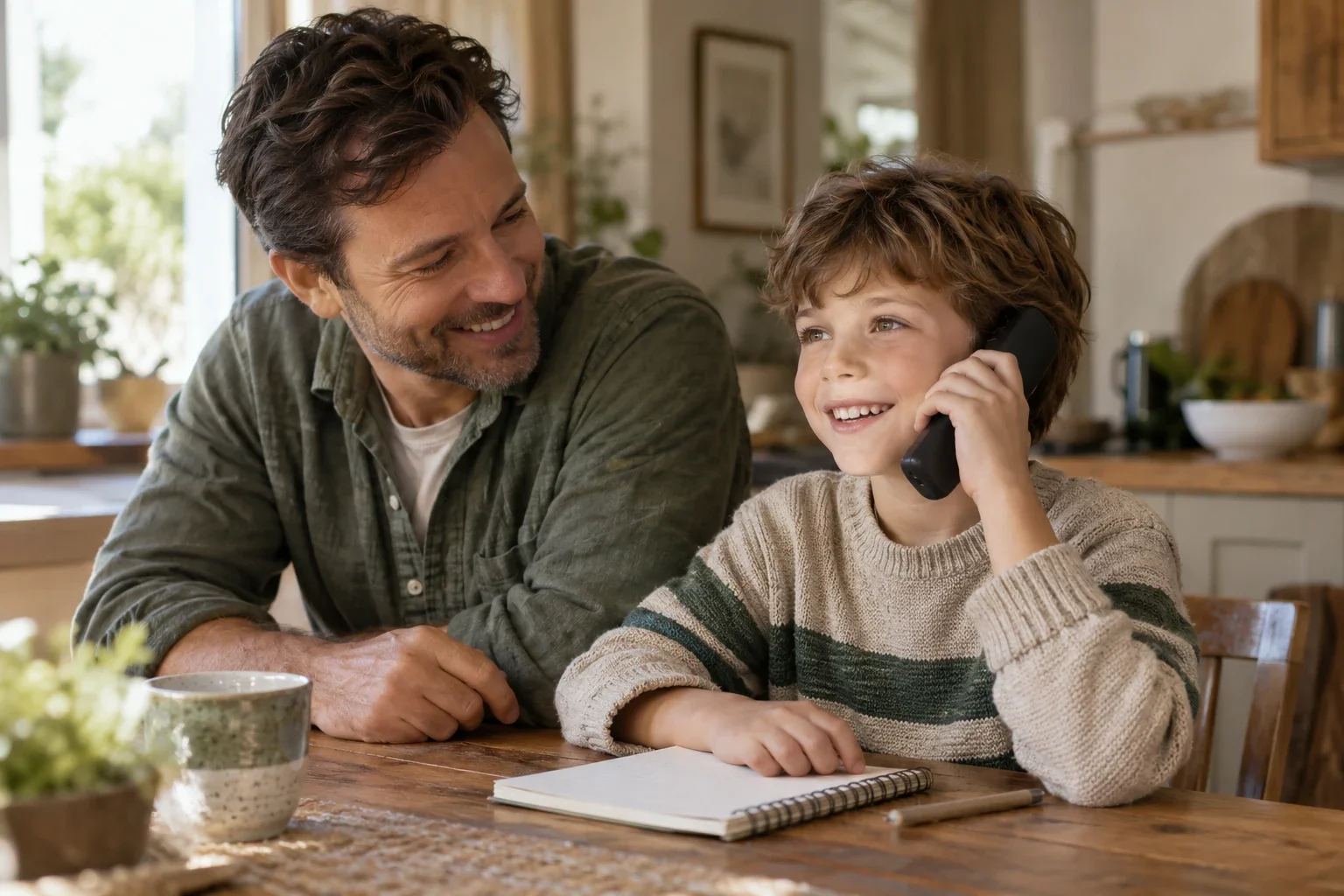
Your kid knows exactly what to say to a friend across the lunch table. Put a telephone in their hand and suddenly the opening line is a mystery.
That is a good reason to practice together. A first call can be small: ask Grandma what she had for lunch, invite a friend over, or tell someone about the drawing that came home from school.
Give them an opening line
Choose a person who knows a practice call is coming. Write down three things: who to ask for, what to say, and how to finish. Then take a turn being the person who answers.
“Hi, this is Jenny. May I please speak to Maya?”
“Hi Maya! Do you want to ride bikes after homework?”
“Okay, I’ll ask my mom. Thanks! Bye.”
Explain that a parent or sibling might answer first. Saying your name helps that person know who is calling. A wrong number can be handled with a simple “Sorry, I have the wrong number,” followed by hanging up and checking with an adult.
Practice listening, too
On a phone, you cannot see someone getting ready to speak. Try taking turns without rushing to fill every pause. Ask one question, listen to the answer, then ask about something they mentioned.
If the room is noisy, move somewhere quieter. Ask before putting someone on speakerphone, and tell them who else can hear. Those are little habits that make a call feel considerate.
Rehearse the less exciting endings
Sometimes a friend is busy. Sometimes nobody answers. Agree on when it is reasonable to try again; repeated ringing is not a better invitation.
A practice voicemail can be just as short:
“Hi Grandma, it’s Jenny. I wanted to tell you about my game. Call us when you have time. Love you!”
Make sure your child knows they can end a call that feels uncomfortable and find a trusted adult. They do not have to explain who is home or answer personal questions from an unfamiliar caller.
Let the next call belong to them
Once the opening feels familiar, step back a little. Let your child find the agreed contact and make the call, with help nearby if needed.
The goal is a useful everyday skill: knowing how to reach someone, ask a question, and enjoy hearing the answer. A five-minute call counts.
Make room for more of those conversations: Screens Down. Voices Up.