
A Language Buddy on the Other End
Practice a sentence, send your attempt, and hear a reply from someone learning in the other direction. A preview of a future phone-learning game.
Updated
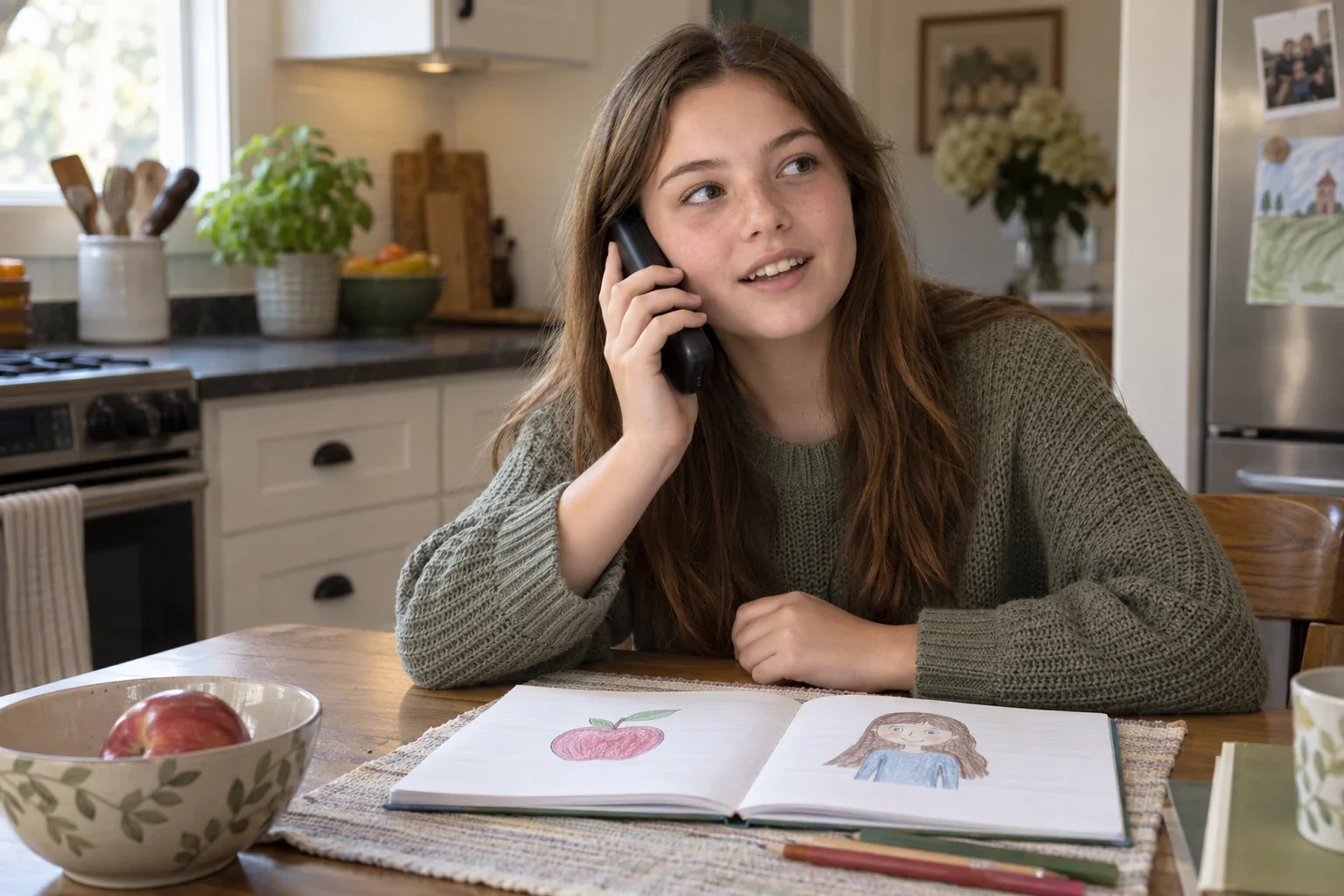
Jenny is learning Spanish. Her family friend is learning English. Each knows something the other is trying to learn.
We are exploring a phone game that lets them practice in short voice turns, even when they cannot both call at the same time. This is an early concept, not an available service.
One sentence, one small attempt
The phone gives Jenny a prompt: “Say this in Spanish: The girl ate the apple.” She records her attempt and presses # when she is finished.
Her approved language buddy could then receive a notice that Jenny has tried the lesson, listen to the recording, and send back an encouraging correction or example. Later, the roles reverse: her buddy tries an English sentence and Jenny gets to help.
The useful moment is the exchange. A real listener can ask what you meant, repeat a tricky word, or laugh with you about the sentence. We want the game to make another attempt feel inviting.
Fit practice around real life
Short recorded turns would let families practice across different schedules. A live call could be an option when both people are ready, but an unanswered ring should not mean the lesson is lost.
Prompts would need age-appropriate topics and a clear way to listen again before sending. The design should distinguish a friendly model answer from a claim that someone has formally assessed pronunciation or language proficiency.
Start with people your family knows
For children, our starting point is family-approved partners: a cousin, a family friend, or someone introduced through a parent. We are not proposing open, anonymous matching between children and strangers.
Before a launch, we need clear decisions about parent approval, recording consent, who can listen, how long recordings stay, and how families can remove them or stop a connection. Those controls are part of making a useful game, not details to leave until after people begin recording.
A conversation worth building
This idea could grow in several directions: everyday vocabulary, short descriptions, questions about a picture, or taking turns telling a very small story. We will share the supported languages, partner model, and lesson formats when there is something ready to try.
If your household would use it, tell us the languages and the kind of practice you would want. There is no need to send a child’s recording or personal details to explain the idea.