
Tech Series · Overview
How Tailscale can help with free House2House calling
Connect the family's PhoneBrains over a private network you manage, including Grandma's house, without using DDcc network minutes.
Updated
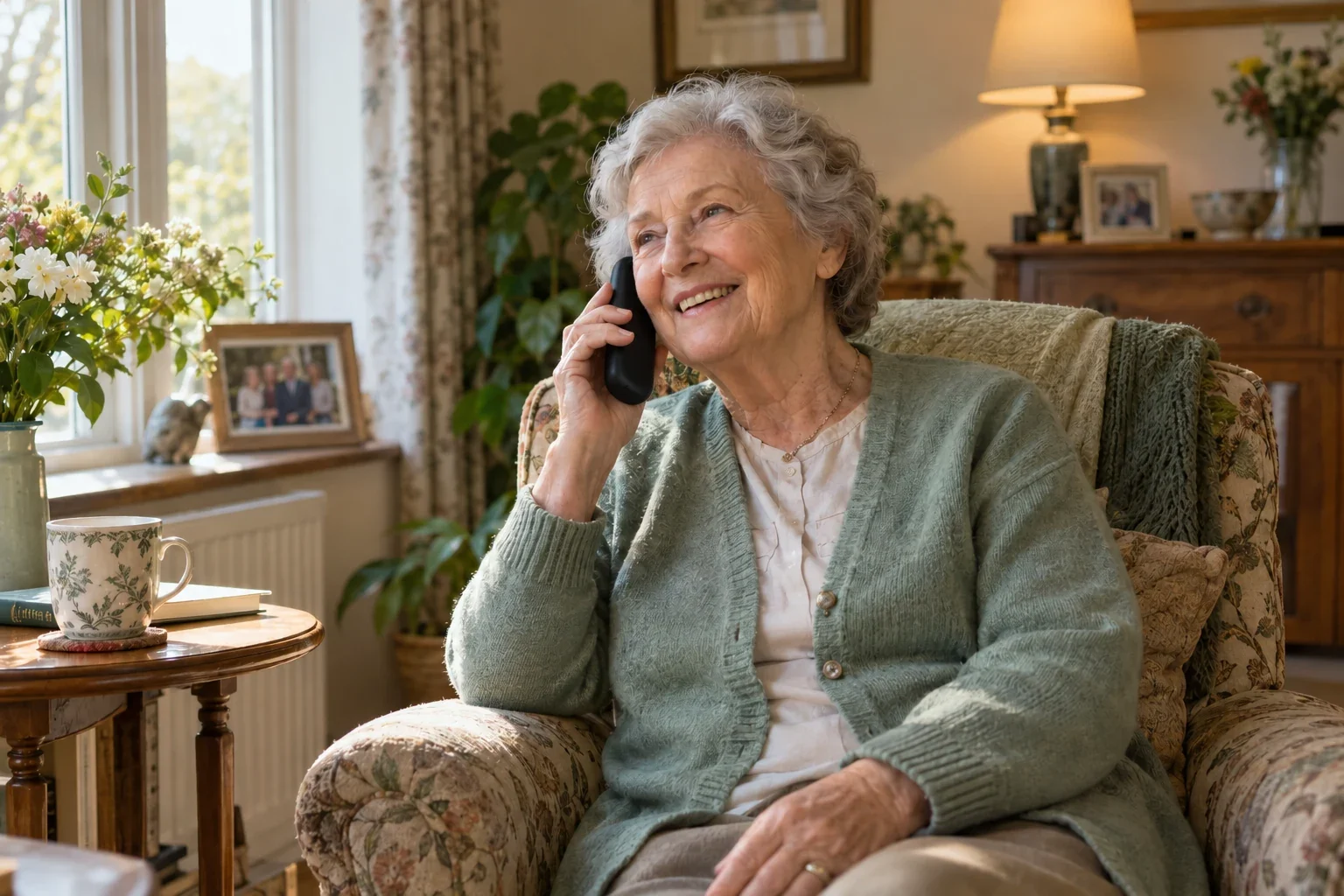
Grandma lives across town. Your children want to pick up the kitchen phone and call hers. Both homes have a Doorman PhoneBrain and a handset. There are two ways we are designing those homes to connect: House2House calling, over a private network your family manages, and DDcc network calling, through Doorman’s managed service.
House2House is for the family with someone who is comfortable setting up the network. Tailscale can help that person connect the Brains even when the houses are miles apart.
The guided Doorman calling setup is still in development. This article explains the approach and what needs configuring; it is not a complete installation recipe. The public network implementation work tracks the calling configuration and supported setup instructions.
A private network between houses
Two Brains on the same home network can reach each other locally. Across separate homes, Tailscale can give the Brains a private network connection over the internet. Tailscale calls that network a tailnet. The homes keep their own routers and internet connections; they do not become one physical LAN.
Tailscale gives enrolled devices their own network addresses and supports rules controlling which devices can communicate. Its job is connectivity. The phone software still needs configuration to place and receive calls over that connection. Tailscale explains that distinction in its device connection guide.
For House2House calling, your family manages both pieces: the private network and the calling routes between the Brains. Grandma can be part of that network just as easily as a cabin or another family home, provided someone handles the setup at each location.
What “free” means here
The House2House design uses no DDcc network minutes and requires no DDcc account for this calling path. Calls that stay on the private network also avoid the ordinary telephone provider’s calling route.
You still need the hardware and internet connections, and you manage the Tailscale account and its access settings. Tailscale currently offers a free Personal plan for eligible non-commercial use; check its current pricing and eligibility when you set up your family network.
There is one terminology wrinkle: Tailscale may carry traffic directly or through its own relay infrastructure when direct connectivity is unavailable. That is part of the Tailscale connection, separate from DDcc’s calling relay and minute balance. A Tailscale relay does not turn a House2House call into a DDcc-minute call. See Tailscale’s connection types.
What the person setting it up will handle
The complete Doorman guide will need to cover these steps on supported hardware:
- Get each Brain and its local handsets working in its own home.
- Install and enrol Tailscale on the Brains using Tailscale’s supported instructions.
- Configure access between the intended Brains for the calling services, including both call signalling and audio. Keep unrelated devices and administration services outside that access.
- Configure Doorman’s routes and unique extension addresses so each Brain knows which house should receive a call.
- Test calls in both directions, two-way audio, household restrictions, and reconnecting after a Brain or router restarts.
A successful network connection is one milestone. Hearing each other on a real handset is the calling test. Installing Tailscale alone does not create Doorman’s calling routes, synchronize phonebooks, or decide which callers the household admits.
Grandma can also choose the managed option
Some families would rather use an invite code than maintain a private network. That is the purpose of DDcc network calling, which is also planned.
Grandma gets a Brain, signs into her DDcc account, shares her invite code, and accepts the family’s connection request. She does not need a regular telephone number or a VoIP provider account for those DDcc calls. The code establishes the connection; a saved phonebook entry can make subsequent calls familiar.
The current plan includes 500 DDcc minutes per account per year, shared across its houses. Minutes are consumed when DDcc relays a call; a DDcc call whose audio travels directly between Brains does not consume them. A regular telephone number is optional and provides another way to address a registered destination.
| House2House | DDcc network calling | |
|---|---|---|
| Connection setup | Family manages the private network and calling configuration | Family connects through DDcc accounts and invitations |
| Regular telephone number required | No | No |
| DDcc account required for this path | No | Yes |
| DDcc minutes used | None | Only when DDcc relays the call |
Either approach connects Doorman installations. Calling ordinary telephone numbers outside those routes still needs an appropriately configured telephone provider. An invite-code-only household has no provider line to fall back to.
If your family enjoys managing its own network, House2House is the route to explore. If Grandma should only need to share a code and answer her phone, the managed DDcc experience is the one we are building for her.